Climate Crisis and Energy Transition
Driving climate crisis mitigation and adaptation with a just energy transition for affected communities.
The climate crisis in Indonesia did not arrive like a polite guest knocking at the door. It is already sitting at the dining table, eating the rice, drying the wells, heating the house, drowning the coastlines, and disrupting the planting season. Fishers read a sea that has become harder to predict. Farmers read a sky that now jokes with sarcasm. Urban residents read the air through coughing, no longer through the calendar. So when the state speaks of “energy transition,” the first question is simple: transition for whom?
On paper, Indonesia already has many beautiful terms. Net zero. Decarbonization. Clean energy. Green investment. Critical mineral downstreaming. Through the Just Energy Transition Partnership, Indonesia is expected to mobilize USD 20 billion to support its energy transition, with targets to cap power-sector emissions at 290 million tons of CO₂e by 2030, push renewable energy to at least 34% of electricity generation, and achieve net zero in the power sector by 2050. These numbers look beautiful. Like tables in a ministry presentation: clean, cold, and written as if no one lives near a coal-fired power plant.
The problem is that Indonesia’s energy transition carries one major irony. It wants to sell a green future while still lighting it with coal. In nickel industrial zones, especially in Central Sulawesi and North Maluku, coal has not disappeared. It has merely changed address. From the public electricity grid to captive coal power plants. From power plants for cities to power plants for smelters. A January 2026 report by Global Energy Monitor and CREA recorded that Indonesia’s operating and planned captive coal capacity has reached 31 GW, with 19.3 GW already operating. This is not a footnote. This is a giant machine that keeps chewing through the air, water, land, and bodies of local communities.
This is where the language of “clean energy” begins to sound like a soap commercial. Nickel is called the mineral of the future because it is needed for batteries and electric vehicles. But in many places, the process is still powered by dirty energy. GEM previously noted that 8.2 GW out of 10.8 GW of operating captive coal capacity in 2023 was used for metal processing industries, including nickel, aluminium, and iron. So what we are seeing is an electric car whose battery was born from a coal furnace. Green in the showroom, dark in the villages around the industrial estate.
A transition like this does not erase the crisis. It simply moves the burden. Global consumers receive low-carbon claims. Investors receive ESG narratives. The state receives growth figures. But communities around industrial zones receive dust, sedimentation, health risks, the loss of fishing grounds, and water that changes color. In Morowali, recent satellite-based research found declining coastal water clarity associated with the expansion of nickel processing in the IMIP area, including the growth of built-up areas and the loss of tree cover at industrial sites. Nature can never be fooled by investment brochures. It records everything in coral, mud, currents, and the bodies of fish.
That is why the measure of an energy transition cannot stop at how many gigawatts of solar power are built. The more honest questions are these: does this transition reduce the power of the fossil fuel industry, or does it simply give it new clothes? Does it restore people’s rights to clean air, water, land, and food, or does it merely replace the company logo on a project signboard? Does it open space for energy democracy, or does it keep decision-making concentrated at the desks of officials, corporations, and banks in Jakarta?
Indonesia often speaks about “energy security,” but rarely about people’s sovereignty over energy. Yet energy is not only about cables, turbines, solar panels, and coal. Energy is about who controls resources, who pays the ecological costs, who receives cheap electricity, and who is forced to live side by side with smokestacks. If the energy transition continues to be built through an extractive logic seize the land, dig the minerals, burn the coal, silence the critical voices then it will only become a new chapter in an old story: development arrives as a promise, then leaves behind a wound.
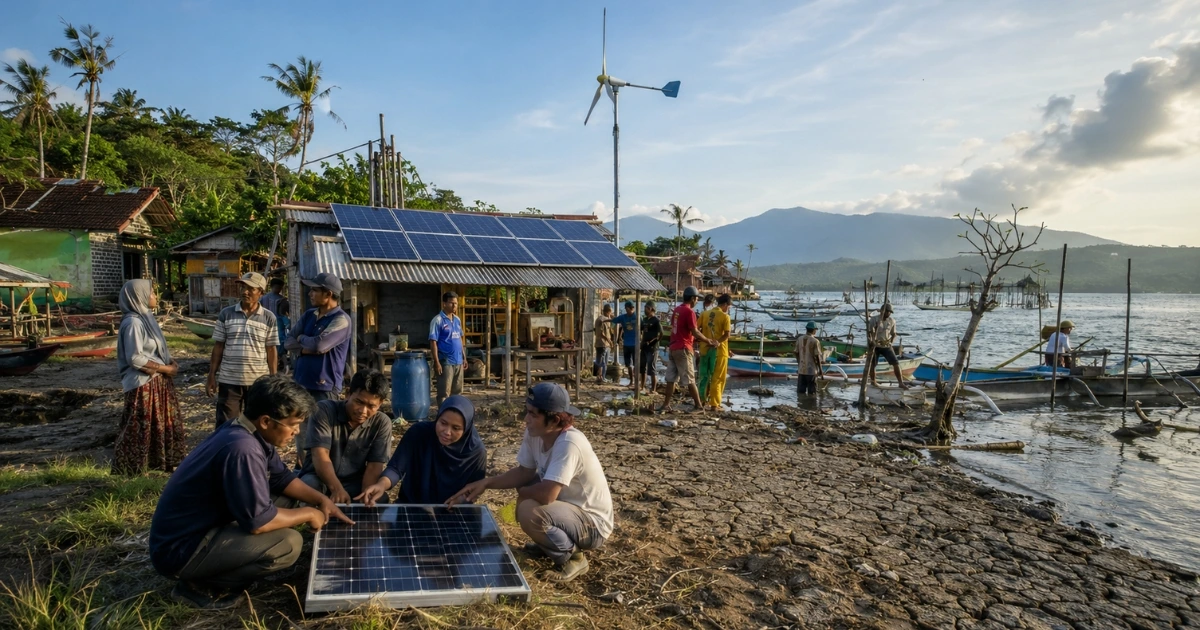
The climate crisis demands a more radical transformation than simply changing fuels. We need a transition that breaks dependence on coal, stops the expansion of captive coal power plants, accelerates decentralized renewable energy, and places communities as subjects, not decorations in public consultation forums. We need solar energy for villages, energy cooperatives, protection for community-managed territories, coastal restoration, public transportation, energy efficiency, and industries that submit to ecological limits.
Because a green future cannot be built by burning someone else’s village. Energy transition must become a way out of the climate crisis, not a new machine for deepening inequality. Otherwise, we are merely painting smokestacks green, then calling the smoke hope.
Articles on This Issue
See All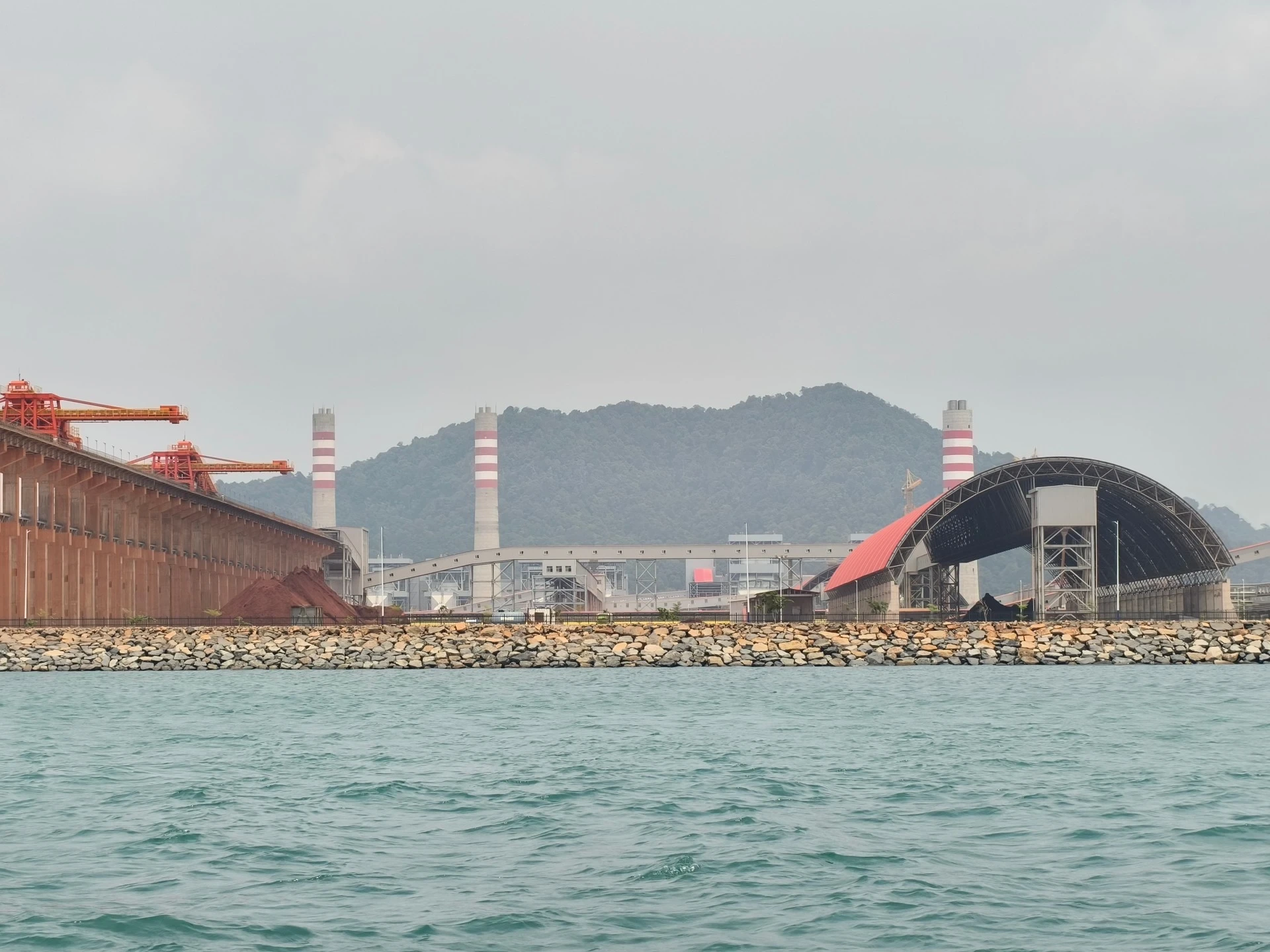
The Unequal Structure of Indonesia’s Energy Governance.
The discussion on energy transition must go beyond technological substitution. Coal must be phased out, but replacing it with solar, geothermal, or other energy sources does not automatically produce justice.