By: Andi Haidar Ali (Climate Director Partner Indonesia)
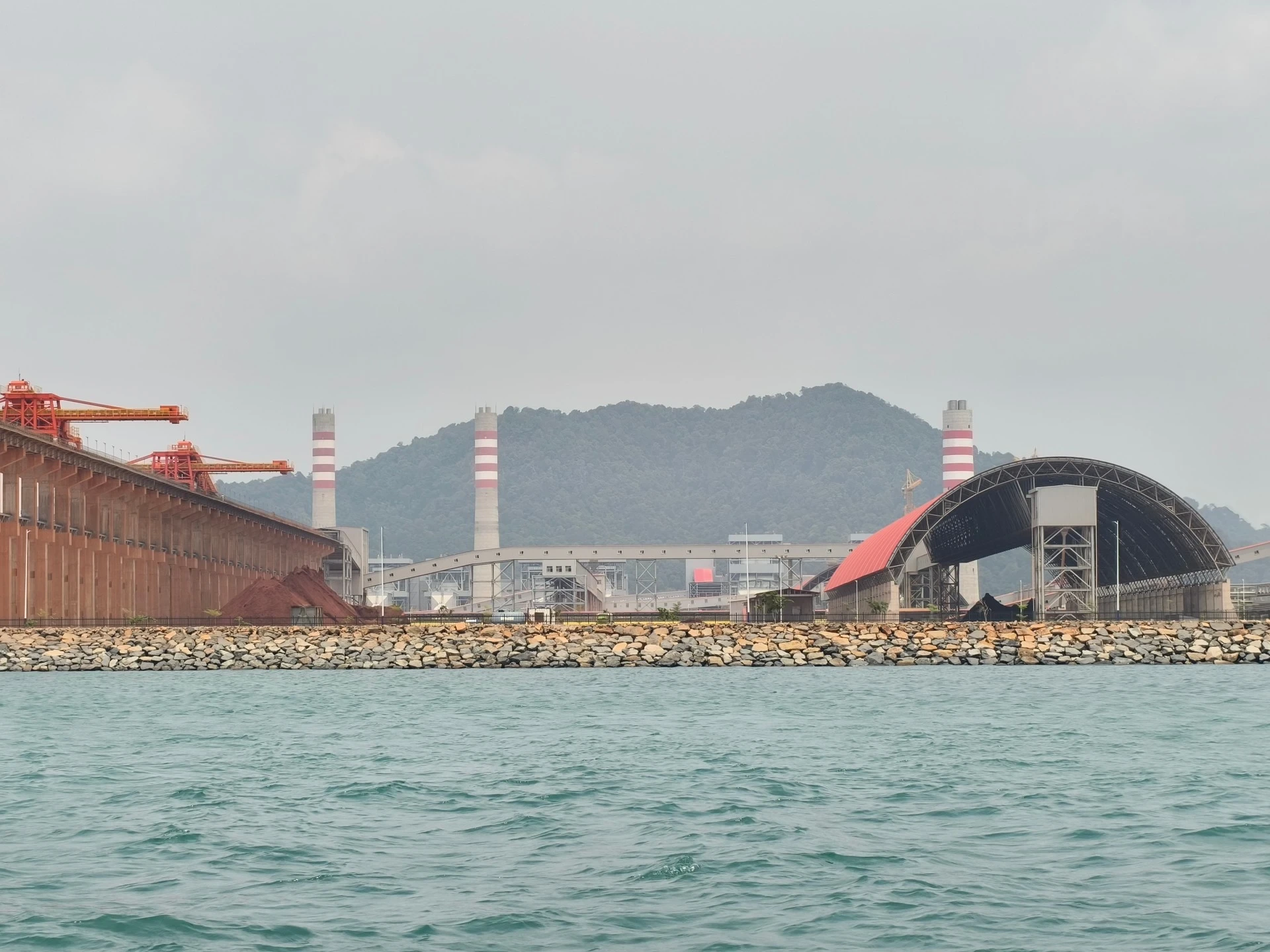
Today I am in Morowali, home to one of Indonesia’s largest nickel-processing industrial complexes. By 7:30 this morning, the roads were already overflowing with workers rushing to reach the industrial area and begin their shifts. Moving in the opposite direction were workers returning home after the night shift, having spent the night keeping the smelter furnaces running.
That same morning, I received news from Makassar, another corner of the same island. Rolling blackouts had been announced, and residents were being told to prepare themselves. Soon afterwards, another update appeared on my social media timeline, this time from Kendari, still on the same island, where announcements and complaints were circulating about electricity outages that had lasted from midday until close to midnight.
On one part of Sulawesi, people are being told to prepare for energy shortages. Somewhere else on the same island, coal-fired furnaces are kept burning to ensure that production targets are met.
A few months earlier, similar reports came from Java. Disruptions to electricity supply were also recorded as far away as Sumatra. The causes may not have been exactly the same: transmission failures, power plants going offline, network maintenance problems, or shortages in coal supply. But any discussion about energy supply cannot stop at technical explanations alone. When one region loses access to electricity while another is defended at all costs to ensure its power supply never stops, we risk losing sight of a much more fundamental question:
How has Indonesia’s electricity system been built?
The more important question, therefore, is not simply why a power plant stopped operating or why electricity failed to reach the water pumps on which urban kampungs and communities have long been forced to depend for access to clean water. The question is why, after decades of coal being extracted on a massive scale from Kalimantan and Sumatra, after the expansion of transmission networks, and after coal-fired power plants have continued to encroach upon the living spaces of coastal communities, the electricity system designed to serve the public remains repeatedly exposed to such fragility.
This question becomes even more important when another part of the economy possesses its own independent electricity system, designed with a far greater degree of supply certainty than the system intended for the public. Was it not one of the foundational promises of this country that its natural wealth would be used for the greatest possible prosperity of the people?
Across Indonesia’s industrial centres, particularly within the mineral-processing sector that has expanded rapidly in recent years, companies have built their own electricity systems to keep smelter furnaces hot and production running twenty-four hours a day. In 2025, CREA and GEM estimated that captive coal-fired power capacity already in operation had reached 19.3 gigawatts. Another 3.6 gigawatts was under construction, while 8.16 gigawatts remained in the planning stage. Taken together, Indonesia’s captive power capacity was approaching 31 gigawatts.
At that scale, captive power can no longer be understood simply as a collection of independent power plants entirely separate from the national electricity system. We need to see the larger structure that has emerged: Indonesia now effectively has two electricity systems drawing on the same fundamental fuel source—coal.
One system exists to ensure that the machinery of production continues to run. The other is responsible for keeping electricity available to hospitals, schools, homes, and the countless activities that allow people to sustain everyday life. The latter should be at the centre of national energy policy. Yet the direction of Indonesia’s electricity development reveals something far more complicated.
When industrial estates require enormous amounts of electricity with uninterrupted supply guarantees, the state gives them space to operate captive coal-fired power plants. Meanwhile, the public is made almost entirely dependent on PLN’s electricity system, with all the complexity and vulnerability of its network. Even citizens who consciously choose to generate electricity through rooftop solar continue to encounter restrictions imposed by the Ministry of Energy and Mineral Resources and PLN through layers of regulation and bureaucracy.
This is why the discussion about blackouts must leave the confines of technical explanation and enter the terrain of justice. Demanding energy justice is not merely about asking whether electricity is available to everyone. It is also about asking how the benefits and burdens of the electricity system are distributed.
In Energy Justice: Re-balancing the Trilemma of Security, Poverty, and Climate Change, Darren McCauley argues that one of the foundations of energy justice is ensuring that the benefits and burdens of energy development are distributed fairly. In Indonesia today, asking whether these benefits and burdens are distributed justly immediately exposes a profound inequality.
Mining concessions clear forests and Indigenous peoples’ territories. Coal is torn from the earth. Rivers are transformed into commercial transport routes. Abandoned mine pits continue to claim lives long after the land is judged to contain nothing else worth extracting.
Elsewhere, communities living around power plants absorb the emissions produced in generating electricity they themselves are not guaranteed to enjoy continuously. Much of that electricity travels towards affluent residential areas, commercial districts, office complexes, and factories elsewhere. Electricity and its economic benefits move across vast distances, while the burden remains where it began: around the power plant and in communities already damaged by coal mining.
The changing pattern of domestic coal consumption associated with captive power also shows how Indonesia’s electricity structure is shifting. The Directorate General of Mineral and Coal’s 2025 Performance Report recorded that the power-generation sector accounted for 57.27 percent of domestic coal consumption. At the same time, the metallurgy and smelting sectors consumed 76.3 million tonnes, equivalent to 30.91 percent of the domestic market obligation, or DMO, recorded in the report. The Directorate General explained that coal in these sectors was used for metallurgical purposes, nickel-processing technologies such as RKEF, and electricity generation.
The figure of 76.3 million tonnes does not mean that all of this coal was burned in captive power plants. Some of it was consumed directly in metallurgical processes. Yet that distinction itself reveals the scale of the transformation now taking place. Indonesia’s downstream mineral-processing policy has created a new centre of domestic coal demand measured in tens of millions of tonnes, while captive coal-fired power capacity has expanded into the tens of gigawatts.
A shift of this magnitude is more than capable of reshaping the structure of the market. Captive coal plants may not be connected to PLN’s electricity grid, but they do not exist within a separate economic universe. Their coal still comes from mines in Kalimantan and Sumatra, and their demand operates within the same domestic coal-governance regime that is also supposed to ensure fuel availability for public electricity.
Ministerial regulations on domestic coal supply require producers to allocate 25 percent of their planned production to the domestic market and regulate domestic supply across multiple categories of consumers. Indonesia’s domestic coal regime therefore does not create a protected reservoir of coal exclusively reserved for public electricity through PLN.
When metallurgical industries absorb tens of millions of tonnes of coal every year and captive coal power expands towards twenty gigawatts of operational capacity, these industries inevitably become one of the largest centres of demand in the domestic coal market. Their consumption draws on production, and in certain cases on coal grades also required by public power plants.
The pressure created by this competition may not always be immediately visible. But when production of particular coal grades declines, logistical capacity becomes constrained, or the government restricts production in an attempt to stabilise prices, the room for manoeuvre in meeting the needs of all domestic coal consumers becomes increasingly narrow.
The situation in Java last June demonstrated what can happen when that room narrows. Coal continued to be extracted from Kalimantan in enormous quantities, yet PLN power plants faced difficulties securing medium-calorific coal that matched their technical specifications. The problem became serious enough that the government eventually had to intervene to secure supplies and restrict exports of certain coal grades.
How can coal be abundant nationally and yet become scarce for public power plants?
This scarcity can no longer be understood simply as a problem of raw-material availability. It is a question of allocation and political priority. Natural wealth cannot be understood merely in terms of how much of a resource exists. What matters is access, control, and the relations of power that determine where that resource comes from and where it goes.
Concessions determine who is permitted to remove coal from the ground. Contracts determine where part of that production will flow. Government-approved work plans and budgets, or RKABs, determine how much may be produced. And public policy determines which interests are prioritised when supply must be secured.
The state, therefore, cannot be treated as a neutral spectator. Writing about accumulation by dispossession in The New Imperialism, David Harvey describes the importance of the state in this process: “The state, with its monopoly of violence and definitions of legality, plays a crucial role.”
Within Indonesia’s electricity system, the role of the state is both extensive and unmistakable. The state issues mining permits, determines RKABs and DMO requirements, establishes industrial estates, and creates the regulatory framework that has allowed captive coal-fired power plants to proliferate. Corporations may operate the machinery, but the direction in which that machinery moves—and the conditions that allow it to expand—cannot be separated from government decisions.
Indonesia’s mineral-downstreaming programme is perhaps the clearest example. The government continuously promotes downstream processing as a pathway towards industrialisation and greater economic value. Nickel, the argument goes, should no longer simply be mined; it must be processed domestically. But every furnace requires enormous quantities of energy. When that demand grows beyond what the public electricity system can provide, the government allows industrial operators to build their own electricity systems. Coal becomes the fastest and cheapest option.
This is where one of the central paradoxes of Indonesia’s energy transition begins to emerge. Nickel downstreaming is promoted as part of a supposedly low-carbon industrial future capable of supplying batteries for electric vehicles, yet the industry itself is powered by furnaces whose electricity is generated by burning coal.
The burden and destruction created by this system do not necessarily arrive overnight. In Slow Violence and the Environmentalism of the Poor, Rob Nixon describes a form of violence that unfolds gradually, often beyond immediate visibility.
Coal-fired power generation possesses precisely this character of violence. Dust moves slowly from smokestacks into people’s homes. Drinking water gradually begins to taste acidic. Agricultural yields decline from one year to the next. None of these transformations happens in a single night, and precisely for that reason communities may not immediately recognise the burden accumulating around them.
A blackout is different.
The moment electricity stops reaching people’s homes, water can no longer be pumped from wells. Everyday routines are immediately interrupted. This is why blackouts provide such an important point of entry for exposing the deeper structure of an electricity system that has lost its orientation towards the public.
Even when an outage lasts only a few hours, it should remind us that a light switch failing to illuminate a room does not happen in isolation. Behind that switch lies an electricity system and a long chain of decisions stretching from the moment a mining concession is granted to the decisions through which the government determines whose energy security must be protected first.
Ordinary people stand at the very end of many of these decisions while possessing almost no power over them. They do not determine how much coal should be extracted, to whom it should be allocated, or how many gigawatts of captive coal capacity should be built. Yet the consequences of those decisions still arrive in everyday life: through transformed landscapes and pollution in upstream extraction zones, and through uncertainty in electricity supply when the public grid comes under pressure.
In Sulawesi, this contradiction can no longer be ignored. The island has become one of the main epicentres of Indonesia’s mineral-downstreaming programme and one of the fastest-growing centres of captive coal power. Yet throughout August and September 2026, communities in South, Southeast, and West Sulawesi continued to face uncertainty in electricity supply and repeated rolling blackouts.
The central issue is not simply what caused each blackout—whether the electricity system lacked coal supply or whether declining water levels reduced output from hydropower, an important source of electricity in the region. The deeper question is whose interests the government chooses to protect.
For industrial estates, uncertainty in electricity supply is treated as a risk that must be eliminated from the outset. For the public, the same uncertainty is more often treated as something to be managed through blackout schedules and official instructions telling people to adjust their activities.
That difference exposes two very different ways in which the state understands energy security. For large corporations, security means certainty. For the public, energy security increasingly means being expected to adapt to uncertainty.
Energy justice must therefore become the foundation of any discussion about electricity governance in Indonesia, particularly as the country debates its energy transition. An energy transition cannot stop at technological substitution. Coal must indeed be abandoned, but replacing it with solar, geothermal energy, or another source does not automatically produce justice.
A renewable-energy transition can still be built through land dispossession, the violation of community rights, and the same concentration of ownership that characterises the existing energy system. If the structure of decision-making remains unchanged, the transition will merely replace one source of energy with another while leaving intact the relations of power that determine where energy flows and whose needs it serves.
A just electricity system must therefore begin with a more fundamental principle: the needs required to sustain life must come before other demands, particularly the demands of capital accumulation.
Electricity for hospitals and schools carries a different social meaning from electricity for smelters. Both require energy, but the state cannot pretend that these needs carry the same social weight.
The blackouts of recent months demonstrate that even amid abundant energy resources and rapidly expanding generation capacity, electricity security and reliability are not distributed equally. For this reason, every blackout must be taken beyond the realm of technical failure. What is at stake is not merely whether the lights will come back on tonight, but the model of development that determines who receives the country’s wealth first.
For decades, people have been asked to accept coal because the country supposedly needed electricity. Thousands of hectares have been opened to mining in the name of national necessity. Coal-fired power plants have been built in the name of development. Yet in recent years, much of the growth in coal-generation capacity has taken place inside industrial estates, while the electricity system serving the public continues to reveal its vulnerability.
The question, then, is no longer how much energy this country possesses or how much it supposedly needs to become a developed nation and guarantee national energy security.
The questions are: for whom are these power plants being built? Who is given priority over this abundance? And whose lives are considered important enough to be guaranteed by the electricity system?
An electricity system does not become just simply because the lights in people’s living rooms come back on. It becomes just when the needs required to sustain life are given priority over the needs required to sustain capital accumulation; when those who bear the burden of destruction possess power over the decisions that produce that destruction; and when the state stops constructing energy certainty for industrial machinery while asking the public to keep learning how to live with uncertainty.
And this is the structural problem at the heart of Indonesia’s energy governance. It is not merely a power plant that stops operating, a transmission line that fails, or even a coal barge that arrives late.
It is a system that decides who is entitled to energy certainty—and who is left to carry most of its risks.